
Concious that some of the WOW subjects had the potential to be fairly intense, I'd decided to head over to the funny women workshop run by pro female comedy set up Funny Women.
Set up by Lynne Parker, Funny Women strives to give a platform to comediennes and ladies who might not otherwise feel they have the confidence to try stand up comedy for themselves.
The special guest was Lynn Ruth Miller, who in later life has embraced comedy, cabaret and storytelling. I had the honour of speaking to her after the workshop.
Lynn did a short stand up routine, or at least sat down on a very tall stool. The mixture of scathing wit and her New York accent made for a fine combination. I sincerely hope I'm as bright and active as Lynn should I be lucky enough to reach her age.
The workshop involved us talking to each other in pairs and using the materials for short presentations. Then individuals were invited to do a short and unprepared routine by describing themselves but though the eyes of their own mothers. A mixture of gaining confidence in public speaking and showing that even just describing everyday events can be made into amusing stories.

WOW 2013 - Shyness in networking
11 March 2013
Sat waiting for Julia Hobsbawm to begin her session, I saw immediately the difference between those attending the session and Julia herself. Those drawn to a talk entitled 'Shyness in networking: How to love something you distrust' were just that; shy and distrustful. Ladies shuffled to their seats choosing those around the edges first and often leaving a spare seat between them and their nearest neighbour.
I was attending any of these conference talks alone. I felt conspicuous anyway so I figured I had nothing to lose by choosing a seat right in the middle but even I didn't stride to the front row, instead going for a fairly safe 3rd row back.
Julia Hobsbawm, Media Woman of the Year 2012, had arrived looking cool, calm and impeccably dressed. Taking a chair centre stage, she began to do a little work with the air of someone who was completely unwatched. Looking up, straight into my wide eyed gaze, Julia gave me a proper rabbit in the headlights moment.
A lady sat next to me and I looked over, giving her the signal that it was OK to chat. She was working for a London based NGO and like me was attending the talk to unlock the ultimate secrets of networking. I think we'd set ourselves up for a bit of a reality check though. The big secret? There isn't really a secret. it's all there in the real world. We just have to open our eyes and see it for ourselves.
Apparently 90% of people are shy of networking. Wonder if that statistic would vary between communities with different cultural levels of social integration? We were advised to learn to overcome this shyness by not being so intimidated by the implied level of intimacy. Living up to 'labels' can inhibit us whether these are labels presented by our peer group or self imposed.
To network successfully you need to have a genuine interest in thebnpeople you're looking to meet and have some ability to read a room. I assume that reading a room means a level of social awareness that stops you from interrupting and disrupting an existing positive interaction between others and allows you so spot opportunities for your own interactions.
Relationships follow the same trajectory as networking. They are a business relationship often born from the same tyuoe of random interaction that crystallises into a lasting friendship. This could be why one of the worst laces to network is a conference as it is a forced interaction on an often shallow level.
Recommended reading: Weak Tie Theory by Michael Granovetter
To be a good networker, you have to know who you are. By knowing who you are you can connect with people working outwards from your position. Much in the way that paths lead to trees which can lead you to birds.
Julia, to my surprise, almost completely slated social media as a waste of time. In our current social media obsessed culture we are driven by our own stats; how many twitter followers, how many Facebook friends, but these are often very weak ties. I'm not sure if I agree that social media creates barriers but I understand that being face to face for networking proves that you're making time for networking . Social media, Julia concedes is useful for information gathering and renewing existing connection.
Networking must be include within your allocated business or working time. Time management is crucial to cresting a strong work/life balance. Roughly speaking a rule of thirds should be used to divide your time. Only one third to be allocated to work, one third for sleeping and eating, with the remaining third given over to your realistic existence and wellbeing. Believing that you can run your life without speciffucalky giving yourself time to do the laundry, make those dentist appointments of just take 5 for yourself is a sure fire path to burn out.
Bearing this in mind, a savvy business person wants to maximise the efficiency of their networking time.
Make sure you are walking into a room worth walking into.
Enter the room and find someone like you or someone you would want to talk to. If no one present matches these criteria, you are in the wrong room. Don't spend more time there than you have to, you are only wasting your time and that of the other people there.
A good tip is to aim for curated gatherings. Have something to say. However small, have something that you know well and can talk about with ease. Doesn't mean you have to talk about this one thing and this one thing only but it will give you a comfortable start to any conversation. An interaction which can then lean on to other mutually interesting subjects.
If you genuinely want change, you can make it happen. Specific interest groups can limit your network. An artist who only goes to art groups will only ever meet other artists. An artist who goes to an event for small businesses has the potential to meet people from many walks of life but who are on a similar business trajectory.
On a final note, don't be that salesman at the party. Knowledge networking is not about transactional results. And remember to be interested. The biggest conversation killer is disinterest. That's where you'll come unstuck.
Julia Hobsbawn can be found on twitter or pop over to her website.
I was attending any of these conference talks alone. I felt conspicuous anyway so I figured I had nothing to lose by choosing a seat right in the middle but even I didn't stride to the front row, instead going for a fairly safe 3rd row back.
Julia Hobsbawm, Media Woman of the Year 2012, had arrived looking cool, calm and impeccably dressed. Taking a chair centre stage, she began to do a little work with the air of someone who was completely unwatched. Looking up, straight into my wide eyed gaze, Julia gave me a proper rabbit in the headlights moment.
A lady sat next to me and I looked over, giving her the signal that it was OK to chat. She was working for a London based NGO and like me was attending the talk to unlock the ultimate secrets of networking. I think we'd set ourselves up for a bit of a reality check though. The big secret? There isn't really a secret. it's all there in the real world. We just have to open our eyes and see it for ourselves.
Apparently 90% of people are shy of networking. Wonder if that statistic would vary between communities with different cultural levels of social integration? We were advised to learn to overcome this shyness by not being so intimidated by the implied level of intimacy. Living up to 'labels' can inhibit us whether these are labels presented by our peer group or self imposed.
To network successfully you need to have a genuine interest in thebnpeople you're looking to meet and have some ability to read a room. I assume that reading a room means a level of social awareness that stops you from interrupting and disrupting an existing positive interaction between others and allows you so spot opportunities for your own interactions.
Relationships follow the same trajectory as networking. They are a business relationship often born from the same tyuoe of random interaction that crystallises into a lasting friendship. This could be why one of the worst laces to network is a conference as it is a forced interaction on an often shallow level.
Recommended reading: Weak Tie Theory by Michael Granovetter
To be a good networker, you have to know who you are. By knowing who you are you can connect with people working outwards from your position. Much in the way that paths lead to trees which can lead you to birds.
Julia, to my surprise, almost completely slated social media as a waste of time. In our current social media obsessed culture we are driven by our own stats; how many twitter followers, how many Facebook friends, but these are often very weak ties. I'm not sure if I agree that social media creates barriers but I understand that being face to face for networking proves that you're making time for networking . Social media, Julia concedes is useful for information gathering and renewing existing connection.
Networking must be include within your allocated business or working time. Time management is crucial to cresting a strong work/life balance. Roughly speaking a rule of thirds should be used to divide your time. Only one third to be allocated to work, one third for sleeping and eating, with the remaining third given over to your realistic existence and wellbeing. Believing that you can run your life without speciffucalky giving yourself time to do the laundry, make those dentist appointments of just take 5 for yourself is a sure fire path to burn out.
Bearing this in mind, a savvy business person wants to maximise the efficiency of their networking time.
Make sure you are walking into a room worth walking into.
Enter the room and find someone like you or someone you would want to talk to. If no one present matches these criteria, you are in the wrong room. Don't spend more time there than you have to, you are only wasting your time and that of the other people there.
A good tip is to aim for curated gatherings. Have something to say. However small, have something that you know well and can talk about with ease. Doesn't mean you have to talk about this one thing and this one thing only but it will give you a comfortable start to any conversation. An interaction which can then lean on to other mutually interesting subjects.
If you genuinely want change, you can make it happen. Specific interest groups can limit your network. An artist who only goes to art groups will only ever meet other artists. An artist who goes to an event for small businesses has the potential to meet people from many walks of life but who are on a similar business trajectory.
On a final note, don't be that salesman at the party. Knowledge networking is not about transactional results. And remember to be interested. The biggest conversation killer is disinterest. That's where you'll come unstuck.
Julia Hobsbawn can be found on twitter or pop over to her website.
WOW 2013 - Individuals can change the world
10 March 2013

To change the world you need a good reason, the belief that you can make a difference and the resolve to stick with that belief even when the going gets tough.
Speaking within the session entitled International Activism, Sarah Brown began by stating that "politics is personal". She believes that "if women are not safe" from harassment of all kinds then they will be restricted in their efforts to "fulfil their potential". We should be equipping girls with the skills and confidence to take the opportunities that come their way. I fully believe that this statement works over and above gender but we were at a conference about women and certainly in other cultures girls do not have the same access to, and freedom within, education as we have in the UK.
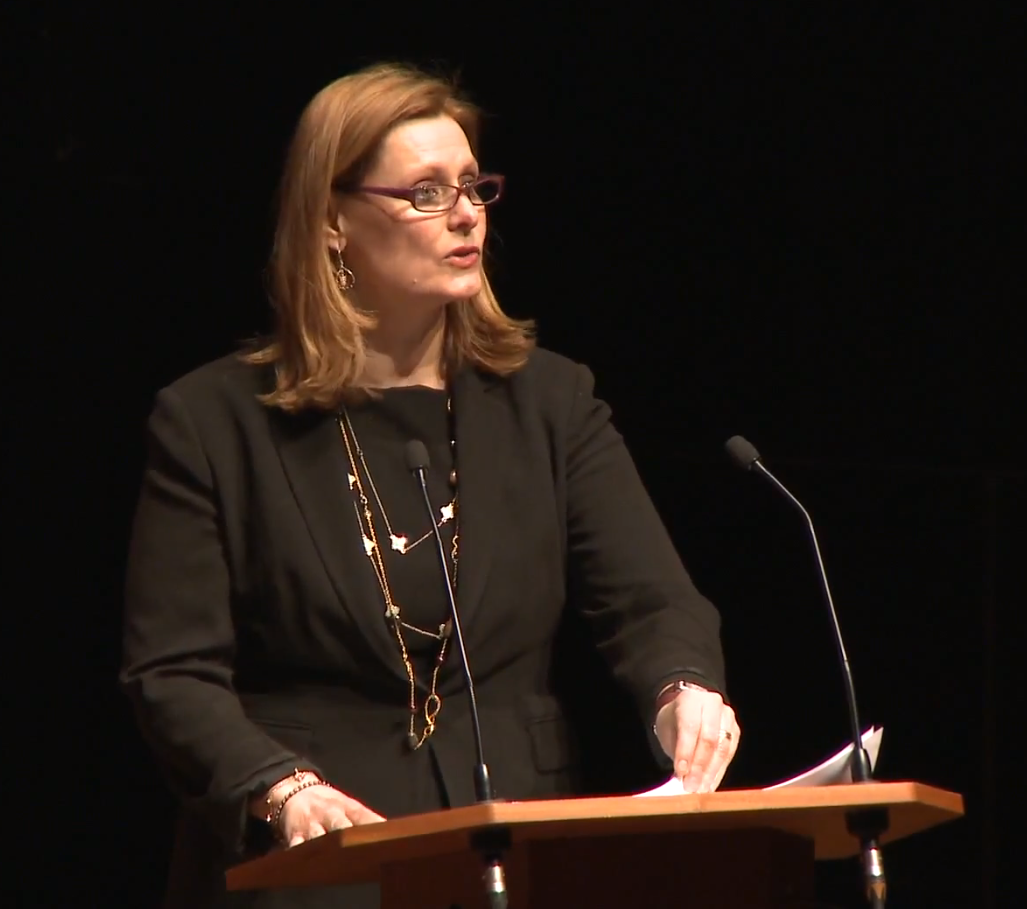 |
| Sarah Brown |
Next up, Baroness Valerie Amos who believes that social media has allowed women to connect with each other to share and discuss issues that their location, circumstance or culture may have otherwise prevented. Valerie has experienced the stories of countless women through her work with the UN and says she often feels helpless when their circumstance are presented to her.

Particularly hard to listen to was the story of a woman who was trying to come to terms with the fact she had physically sold her daughter. The woman had felt this was the only option available to her to shield her daughter from the abuse she was likely to receive without the security of male protection.
Gordon Brown followed, speaking passionately about the need to address equality in educational rights. I'd only ever seen Gordon speak on television about political issues when he was Prime Minister. I have to say that after seeing him speak at WOW, I have a much greater respect for him.
 |
| Gordon Brown |
 |
| Ziauddin Yousafzai |
Finally Ziauddin Yousafzai took to the lectern to speak of a girl's right to an education. If you are not sure who he is, then apart from a peace campaigner, he's the father of Malala, whose story you can read about via the link at the end of this post.
"Some cultures have fathers in search of a son... they do not celebrate birthdays of daughters."
Ziauddin quoted the old saying that behind every great man is a woman but said that he believes women need to take a step forward and stand side by side with men. Ziauddin lives by his own words too. "I honour my daughter as a personal and as an individual. My wife is not my property and I honour and trust her." Ziauddin added that a men's world is troublesome and full of wars suggesting that giving more 'space' to women would bring about a more prosperous and peaceful world. Men command and control. Women are more about collaboration and inclusion.
Ziaddin finished with his words for the future. Honour. Trust. Educate.
If you'd like to see the full session, you can! The Southbank Centre kindly filmed it.
Sarah Brown is patron of the White Ribbon Alliance, founder of PiggyBankKids, Chair of Global Business Coalition for Education and tweets from @SarahBrownUK.
Valerie Amos is UN Under-Secretary-General for Humanitarian Affairs and Emergency Relief Coordinator and tweets from @ValerieAmos.
Gordon Brown is former Prime Minster of the UK and for more on his latest projects visit his website.
Ziauddin Yousafzai is an education activist and peace campaigner from Pakistan whose daughter was shot for wanting the right to an education. You can learn her story here or follow the campaign using twitter hash tag #iamMalala
WOW 2013 - Economy and Value
9 March 2013

My friend had been to a pre-event though and told me that it wasn't all bra-burning and proclaiming from the roof tops. I purchased a ticket and now I'm glad I did.
As a side note, I've already realised that the bra-burning myth is largely a media driven construct to make women thinking for themselves seem like a crazy, dangerous notion. Also it was the Daily Mail who coined the term 'suffragettes' to describe the members of the Women's Suffrage Party. Initially seen as a slightly belittling nickname, the women involved embraced it as it helped gain valuable public attention.
The BBC's economics editor, Stephanie Flanders opened by admitting that she 'doesn't always think of economics in gender terms'. More important to her is the fact we have a 'financial crisis on our doorstep' and many people don't even understand the difference between reducing our deficit and reducing debt. Our government is striving to reduce the deficit and are keen to tell the public they are doing so, while in the background our debt has grown and will keep growing. The economies of former emerging markets like China and India are growing with great speed and their impact in the world market will influence the balance of the future.
 |
| Stephanie Flanders |
Stephanie pointed out it is micro things that effect our standard of living rather than the bigger issues addressed in the news. 'Ten years ago there was no facebook, no smart phones, no kindles, no Sky Plus. I is very interesting that these things are not seen as luxuries during our current recession. It isn't just the rich who are buying smart phones either, they are mainstream commodities.
Governments are beginning to realise that having a greater number of women in the workplace could be very good for GDP. In Japan, encouraging more women into work could solve the country's economic crisis.
Cathy Turner, an executive from the world of banking, joined the debate saying that women present in the workforce changes it's dynamic. Women generally tend to borrow less to invest in business and, while unlikely to experience the growth and results boom generated by males, their businesses tend to become sustainable in the long term. I personally think this calls into question your reason for the business in the first place. If your intention is to make money as soon as possible then I can see why males do business in the way they do. However if you are genuinely trying to offer a service or product which can improve lives then maybe we should take the female path.
 |
| Cathy Turner |
Cathy also quoted some telling statistics. 70% of part time jobs are currently held by women and at senior management level, we are still mainly represented by our male counterparts.
Then followed the passion of Jamuben Ayar and her colleague Savita Patel from SEWA (Self Employed Women's Association). Jamuben has been involved with SEWA after being approached in the 1970s. She is now overseer of 20,000 women and her daughter was the first in her village to graduate from school paid for by Jamuben's earnings.
 |
| Jamuben Khangabhai Ayar [on the left] and Savitaben Patel |
To explain, SEWA has helped Indian women to realise the value of their intricate embroidery work, previously created only for home use or as gifts for their daughters when they were married and leaving the parental home.
An average salary at the time for a male Indian worker was 50 rupees per day and for a female, dispute the fact many were farm labourers, just 10 rupees per day. The villagers were migratory in times of drought and faced periods with little work. They were also used to 'middle men' contractors taking their skills for a very low return. The women didn't even know the true value of their home confined skills. SEWA offered Jamuben and her fellow workers 250 rupees for an embroidery order on the promise that they would do a good job.
They did and it's turned out well for vast amounts of women. In a society where the men would traditionally 'own' the money, women could now decide how they wanted to spend their earnings.
The first choice of many women was to use the money to send their children to school. With the reassurance of regular work, the community stopped migrating and started training and education programmes. Education gave them the opportunity to solve issues like sanitation, proper education for their children and then chance to have two meals a day.
Money brings power, the power of choice. In the case of the Indian ladies, they were being treated as viable people who could be respected as they were now controlling the purse strings. The tradional way would be to refer to things in the context of the alpha male relative to the person/item. This is (man)'s son/daughter/goat/house. The power shift caused a shift in context. Now identifications are made with references to Jamuben herself. Jamuben's son/daughter/goat/house.
To say their story is insipiring sounds flippant. It highlighted to me the importance of valuing yourself and doing so by valuing the skills you command. Everyone has skills and the key is recognising them and realising their true worth.
If you wish you'd seen the full session for yourself, you can, as the Southbank kindly filmed it!
For more from Stephanie Flanders, she tweets from @BBCStephanie and writes for the BBC here.
Beautiful Book Covers
9 February 2013

Back in the times where books were all bound in similar styles and materials I agree that you couldn't judge a book by it's cover. A tatty book may be that way through neglect or through extensive use by eager readers!
Now things are different. Very often you can judge a book by it's cover. The publishers will have looked for illustrators/designers working in a style sympathetic to the book's content or desired target audience. Your eye will naturally be drawn to the symbolism of things you like. This symbolism then becomes a language between your brain and the book publishers.
As social preferences evolve, so does the language. You'll notice if your library has many old* books that you may find it harder to judge whether you'll like the book because the visual language used is not one you're familiar with.
*old as in copies printed before you were able to read
If you fancy challenging yourself to read something different then pick up a book with a cover you'd normally skip straight past. You might find a hidden gem or unlock a whole new genre you didn't know you cared about.
Below is my collection of book covers I consider to be beautiful which I will add to over time, as and when they catch my eye. If we have similar tastes then I think you'll enjoy them!

illustrator Sarah Gibb

designer Kirk Benshoff

designer James Alexander at Jade Design


designer Peter Saville


That'll be milk, bread and a recommendation please
16 December 2012
If like me your irritation at miscellaneous minutiae would give Jon Richardson a run for his money then I think you'll enjoy these recent ads for Google Analytics.
Fans of Fresh Meat will appreciate the guest appearance in this quest for milk!
Better than sliced bread - as long as you don't want it today.
And may I recommend...
Fans of Fresh Meat will appreciate the guest appearance in this quest for milk!
Better than sliced bread - as long as you don't want it today.
And may I recommend...
Small and fluffy but with big ambitions
2 October 2012
When you are a child you are taught to look up and imagine shapes and stories presented to you by their various forms. They'll catch your eye as the sun shines through at sunset or sunrise. You can tell the direction of the wind by watching them hurry along like commuters journeying to work.
Clouds come in all shapes and sizes but it's often the small cute ones that claim their fair share of the commercial limelight.
A few years ago I was delighted by the Pixar short Partly Cloudy.
Earlier this year Danny Boyle's dramatic opening ceremony for the Olympic Games 2012 in London gently gathered the audience's attention and interest with fluffy clouds on strings guided around the running track.


Then today, we have the Guinness cloud, who is clearly 'made of more'!

Our desire to personify inanimate objects works particularly well with clouds as they don't share our physical human constraints. Apart from the Pixar short which goes some way to create our own forms in the material of another. I think in a more natural sense their movement conveys ideas more akin to our freedom of thought.
Subscribe to:
Posts (Atom)